For companies in Bosnia and Herzegovina exporting to the European Union, sustainability is increasingly becoming a key factor for competitiveness and maintaining business partnerships. As more than 70% of BiH exports are directed to the EU, requirements related to CBAM regulation, ESG standards, as well as human rights and environmental due diligence are becoming increasingly important for domestic exporters.
For small and medium-sized enterprises, which often lack internal capacities to follow fast-changing regulatory developments, the key question is no longer only understanding new rules, but translating them into practical and applicable business actions.
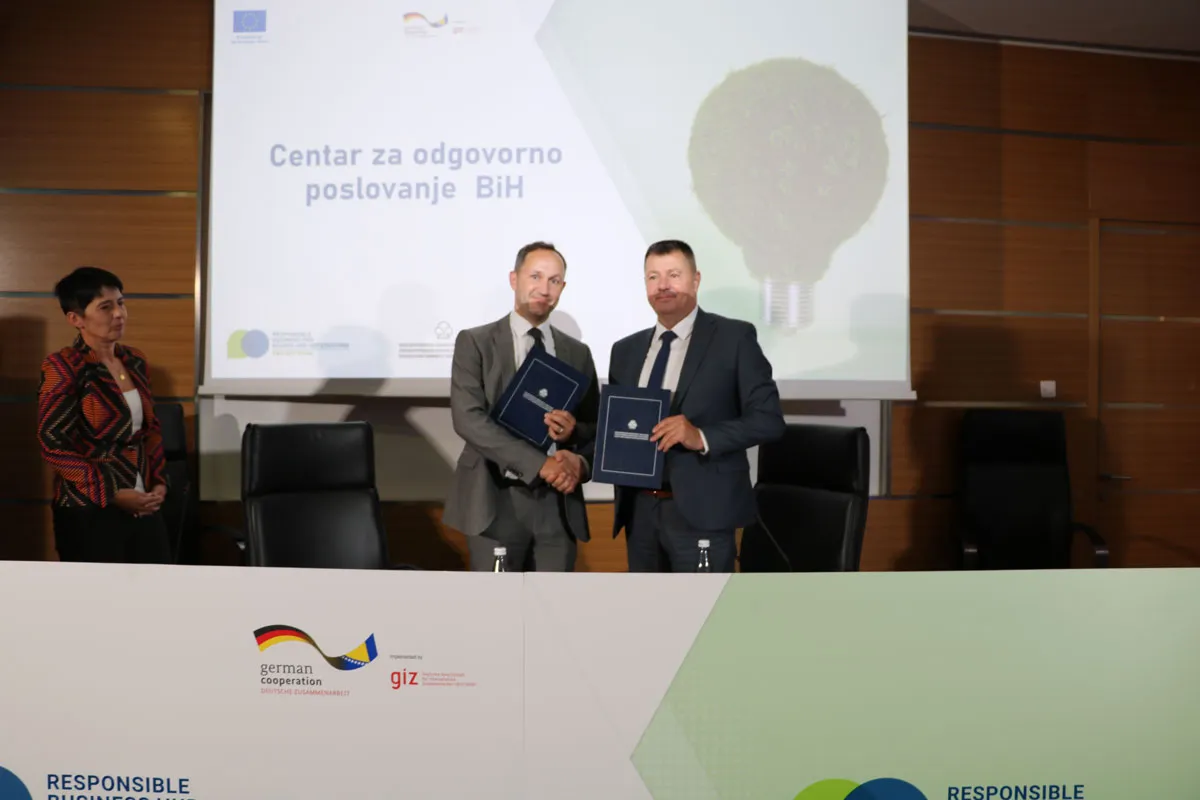
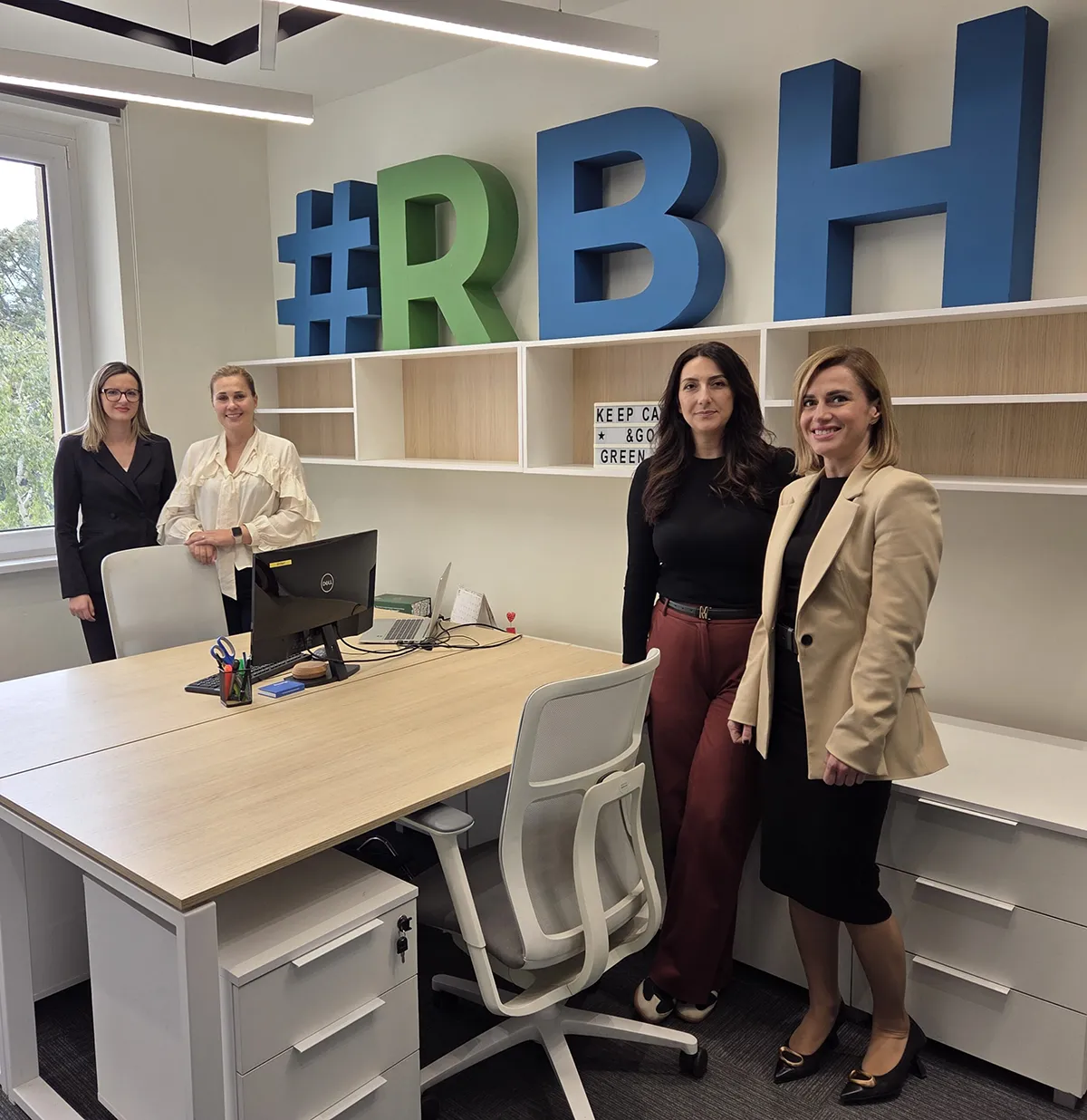
This is exactly where the Responsible Business Hub BiH (RBH BiH) comes in, established within the Foreign Trade/Chamber of Commerce of Bosnia and Herzegovina. The Centre is part of the EU4 Private Sector Development initiative in BiH, co-funded by the European Union and the Government of the Federal Republic of Germany, and implemented by GIZ.
As stated by Ognjenka Lalović, Director of the Economy Sector at the Foreign Trade/Chamber of Commerce of BiH, the aim of RBH BiH is to bring complex European requirements closer to companies and transform them into clear and applicable business steps.
“Instead of companies trying to navigate complex regulations and technical terminology on their own, the Centre provides access to information, training, advisory services and local expertise. Through our activities, we support them in areas such as CBAM reporting, ESG principles, human rights and environmental due diligence, carbon footprint calculation, energy and resource efficiency, as well as the development of green products and services,” Lalović explains.
One of the most important challenges for BiH exporters is CBAM – the Carbon Border Adjustment Mechanism. From 2026, it enters its full implementation phase, meaning that EU importers must have accurate emissions data related to the products they import. For companies in Bosnia and Herzegovina, particularly in sectors such as metal processing, this becomes a direct requirement for maintaining access to the EU market.
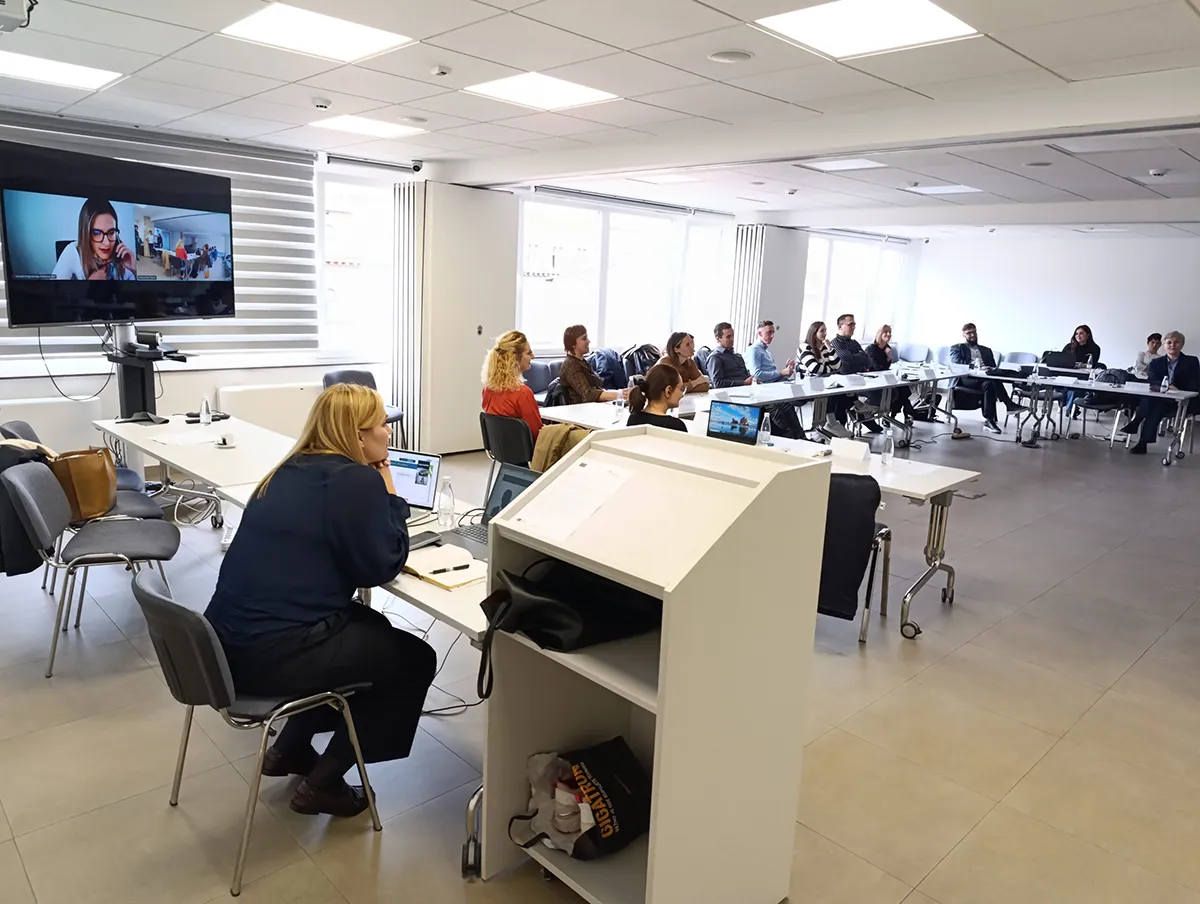
RBH BiH responds to these needs through practical workshops, specialised trainings, and advisory support. So far, more than 150 companies from different sectors across Bosnia and Herzegovina have been supported through the Centre’s activities, showing that domestic businesses recognise the importance of the green transition, but also require concrete expert assistance to implement it effectively.
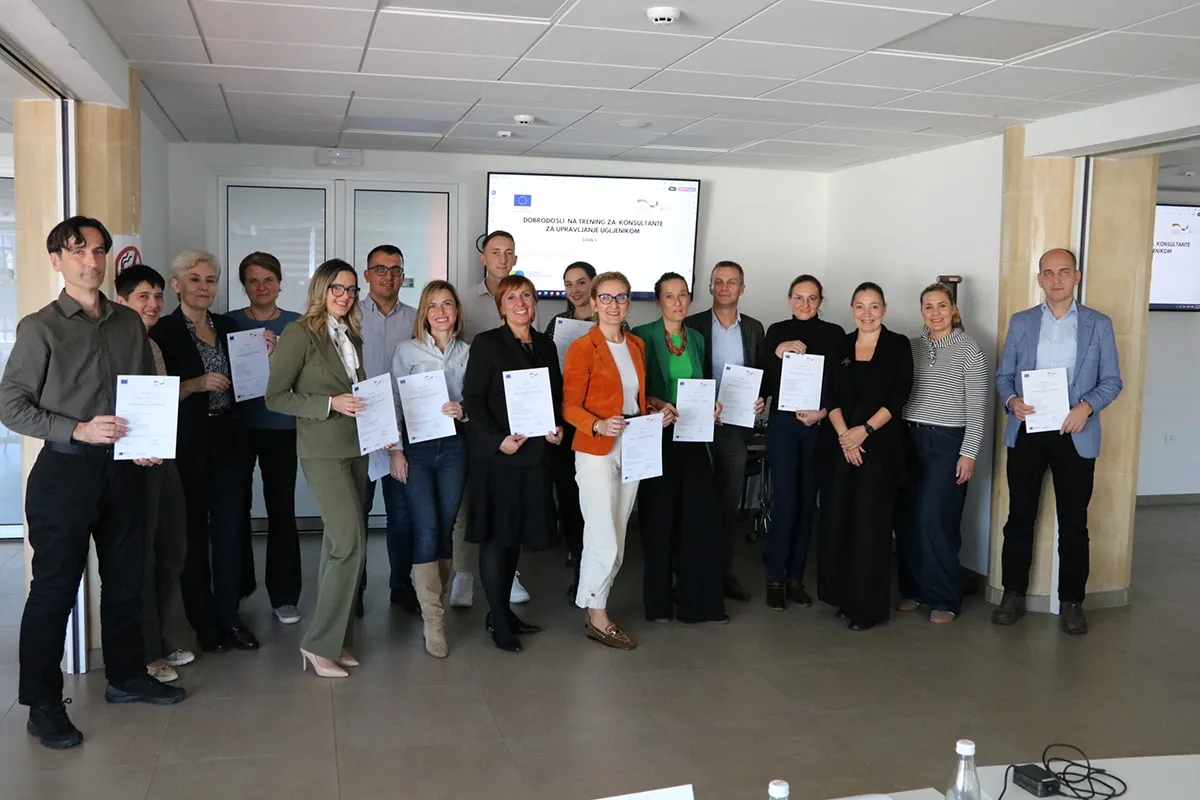
A key strength of the Centre is the RBH Consultant Network, which brings together 26 certified local experts. Through this network, companies can access targeted and practical support—from CBAM reporting and carbon footprint calculations to ESG implementation, improved energy and resource efficiency, and the development of green products and services.
RBH consultant Azra Bećirović emphasizes that the concept of human rights and environmental due diligence is often misunderstood as an obligation only for large companies.
“In practice, European buyers increasingly expect suppliers to actively identify and manage risks within their own operations and supply chains. Through advisory work, we go through concrete processes, map supplier relationships, and identify what really needs to be documented. The value of expert support is not only in regulations, but in understanding how to apply them in real business practice and how to make changes sustainable,” she notes.
The need for such an approach is also confirmed by the SME Green Barometer, developed in cooperation with the Sarajevo School of Science and Technology. According to the findings, 78% of small and medium-sized enterprises in BiH see the green transition as an opportunity, while 60% of them cite a lack of knowledge and expertise as the main barrier to implementation.
This is precisely where RBH BiH plays a key role—connecting companies with knowledge, tools, and experts who help translate European market requirements into concrete business improvements.
As RBH consultant Azrudin Husika explains, continuous support is particularly important in the area of CBAM, where regulations are rapidly evolving and require constant adaptation.
“Companies often face uncertainties regarding technical aspects such as energy allocation in production processes, emission calculations, or the application of the phase-in period. Additional challenges arise in communication with EU clients and understanding obligations under the CBAM registry. Therefore, continuous expert support is essential for companies to maintain their position in the EU market,” Husika explains.
RBH BiH support does not end with regulatory compliance. Through energy and resource audits, as well as advisory services on sustainable business practices, companies gain opportunities to reduce costs, improve processes, and increase efficiency. In this way, the green transition becomes not only an obligation but also a business opportunity.
RBH BiH is part of the international Responsible Business Hub network, which connects organisations worldwide and enables the exchange of knowledge, experience, and best practices. For Bosnia and Herzegovina, this means strengthening the domestic support ecosystem and better integration into global responsible business value chains.
Through free trainings, advisory services, practical tools, and a network of experts, RBH BiH demonstrates how complex European market requirements can be transformed into concrete opportunities for domestic companies. The green transition thus ceases to be a challenge to postpone and becomes a pathway towards a more competitive, resilient, and sustainable economy in Bosnia and Herzegovina.
This success story was developed within the Sustainable Economic Development and Employment Promotion Programme (SEDEP) in Bosnia and Herzegovina, jointly financed by the European Union, the Government of Switzerland and the German Federal Ministry for Economic Cooperation and Development (BMZ), and implemented by GIZ.