Behind every product from Bosnia and Herzegovina reaching a European customer lies a complex chain of decisions: from the selection of materials and suppliers, through production and transport, to the way companies manage risks and document their operations. In these processes, sustainability is increasingly becoming part of companies’ daily operations, rather than only a topic discussed in reports and strategies. For domestic companies, developing knowledge in this area has direct business relevance. Clearer procurement criteria, better understanding of suppliers, and the ability to identify environmental and social risks contribute to more stable business operations and higher-quality cooperation with international partners.
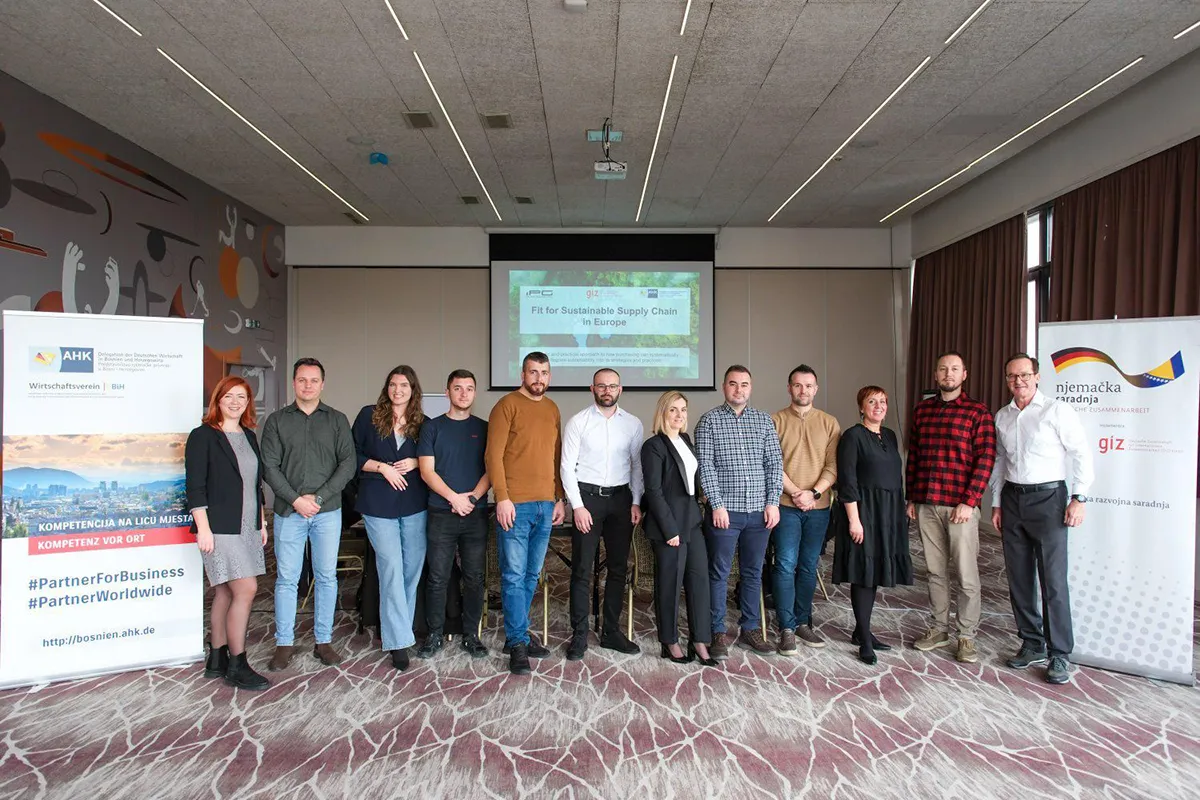
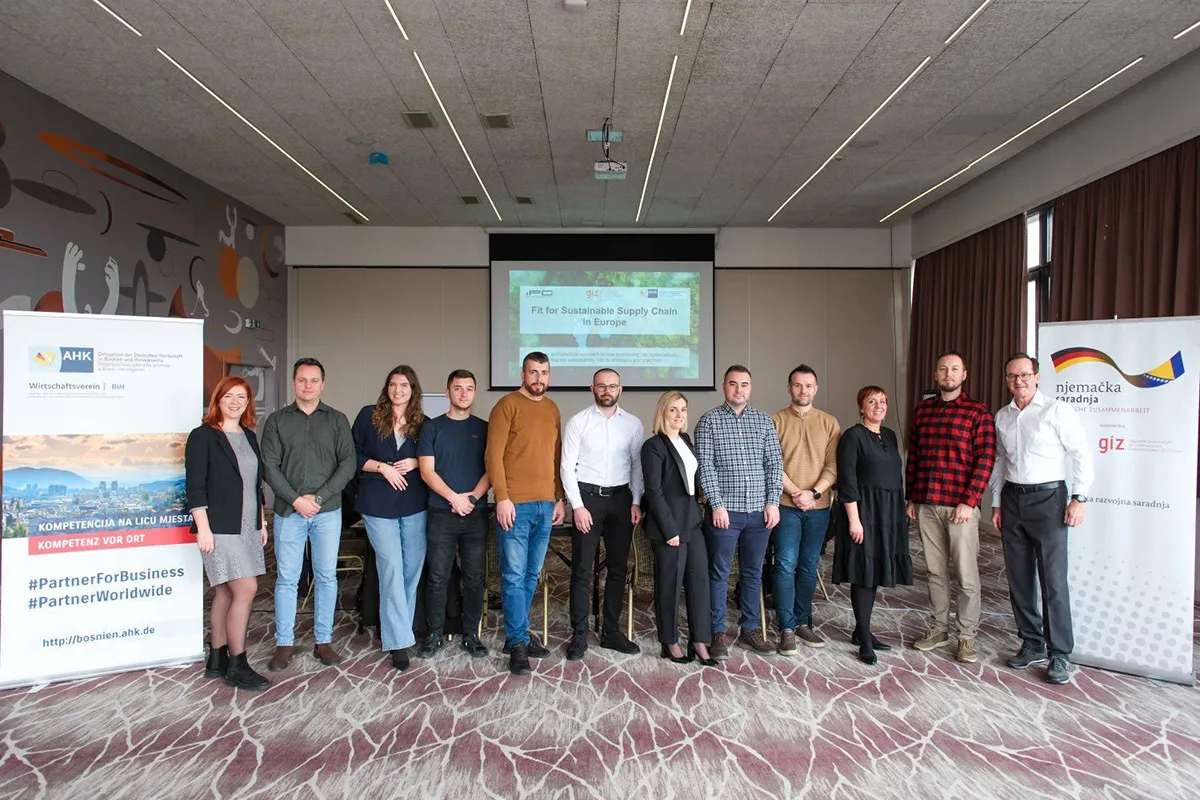
To respond to these needs, the Representative Office of the German Economy in BiH (AHK BiH) implemented the multi-month programme “Fit for Sustainable Supply Chain in Europe”, which brought together ten participants from Bosnia and Herzegovina with the aim of developing practical knowledge on sustainable procurement and supply chain management, and enabling them to apply and transfer this knowledge in their daily work. The programme was implemented within the Private Sector Development Initiative in BiH, co-financed by the European Union and the Government of the Federal Republic of Germany, and implemented by the Deutsche Gesellschaft für Internationale Zusammenarbeit (GIZ) GmbH.
Azra Ramić, Deputy Director of the Representative Office of the German Economy in BiH, emphasized that the “Fit for Sustainable Supply Chain in Europe” programme was designed to offer domestic companies more than theoretical knowledge.
“The focus was on the practical application of sustainability requirements in real business processes. We saw that companies very quickly recognize how sustainable procurement directly affects their competitiveness, market access, and long-term business stability. It is especially important that this programme develops local expertise that remains within companies and becomes part of their everyday decision-making. This is exactly the key change we want to see – that sustainability becomes an integral part of business practice, rather than a separate topic.”
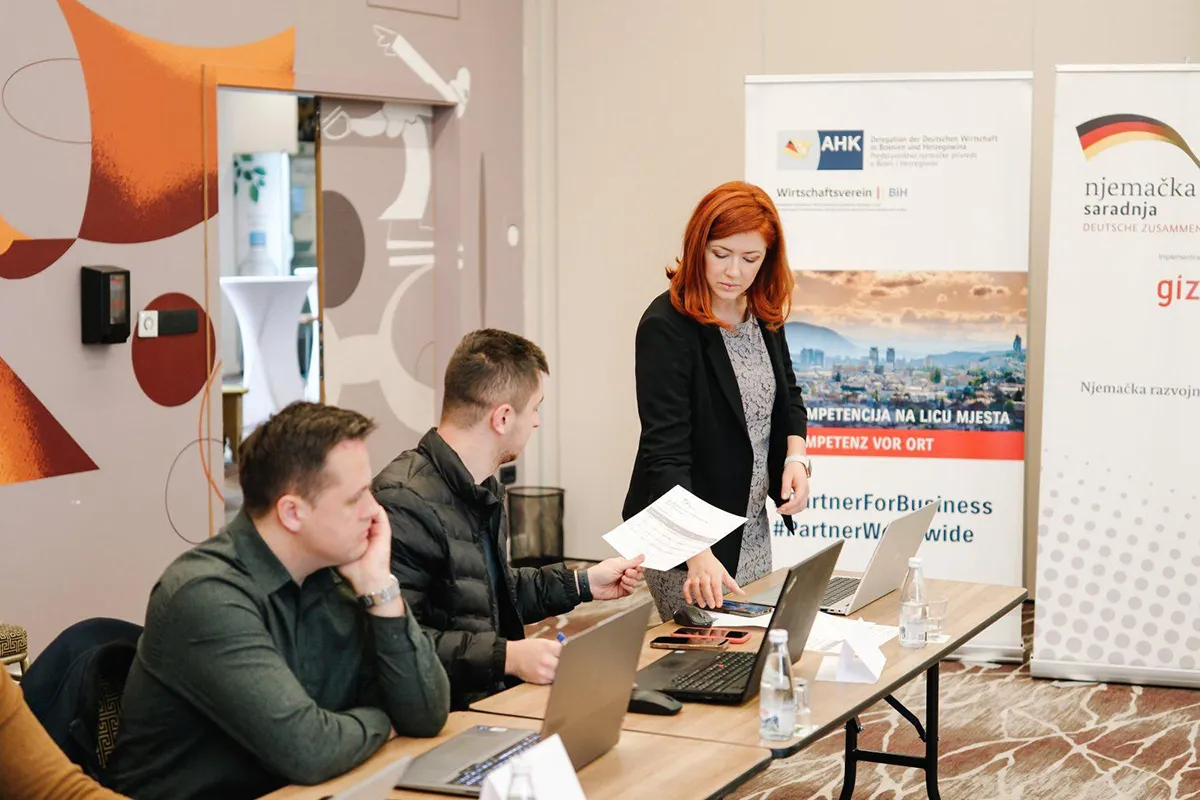
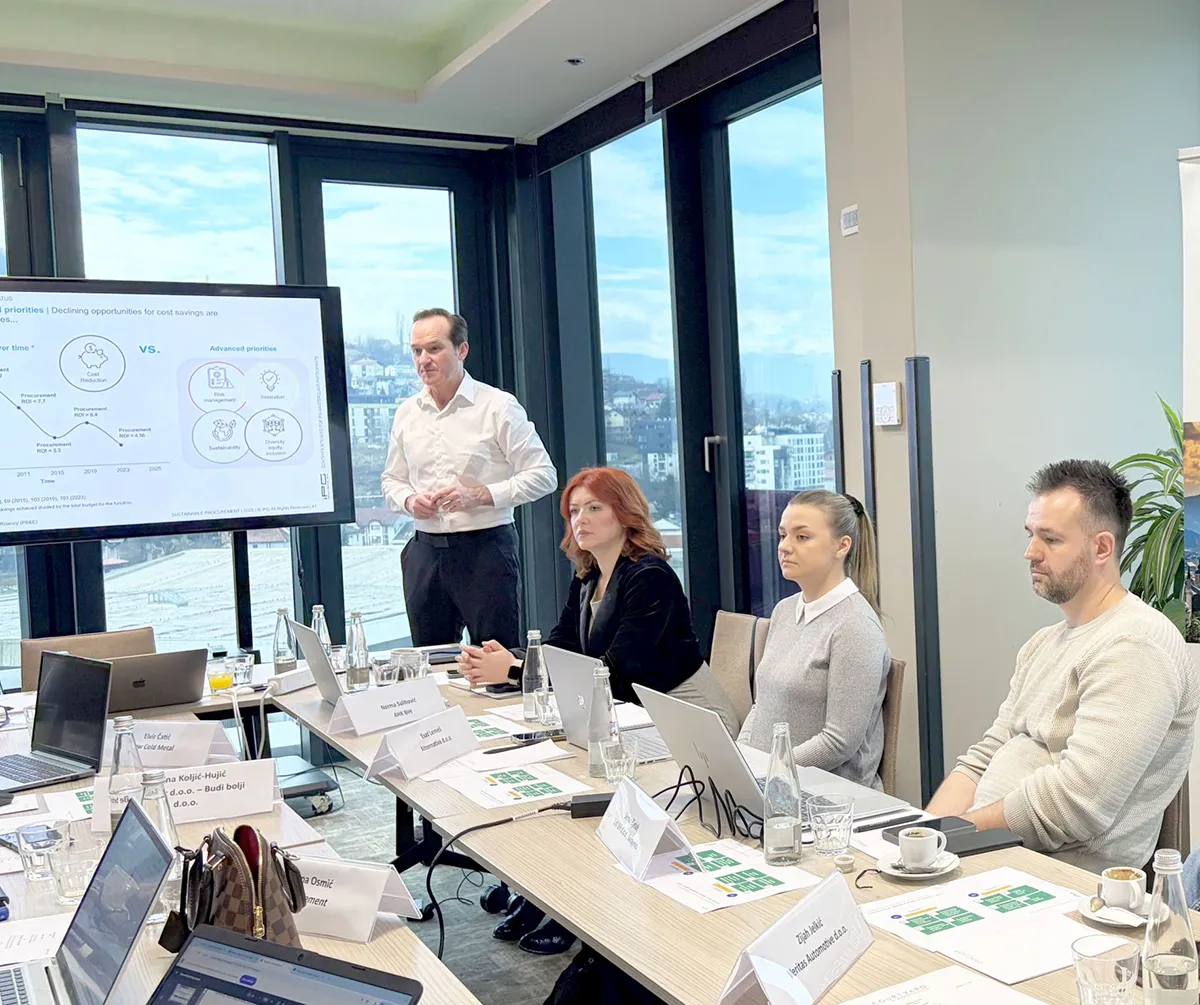
The training was led by Carsten Vollrath, an international expert with more than 30 years of experience in procurement, supply chain management, and business transformation. His experience enabled participants to connect programme content with business processes, supplier relationship challenges, and changes affecting companies linked to the European market. The programme covered the business and regulatory environment of sustainable procurement, assessment of the current company situation, product and material analysis, supplier management, supply chain analysis, measurement of procurement-related emissions, and development of a roadmap for further process improvement.
Speaking about the work with participants, Vollrath noted that during the programme they demonstrated that sustainable procurement is increasingly recognized as a strategic business opportunity rather than merely a regulatory obligation. According to him, participants quickly connected complex sustainability requirements with the reality of their companies and showed readiness to initiate changes within their organizations.
“I am particularly encouraged by the emergence of a new generation of local sustainability experts who are capable of supporting their organizations and transferring their knowledge to others. I am convinced that this growing expertise will play an important role in enabling companies from Bosnia and Herzegovina to meet the expectations of the European market and build more resilient, competitive, and sustainable supply chains,” said Vollrath from IPG Partners Group.
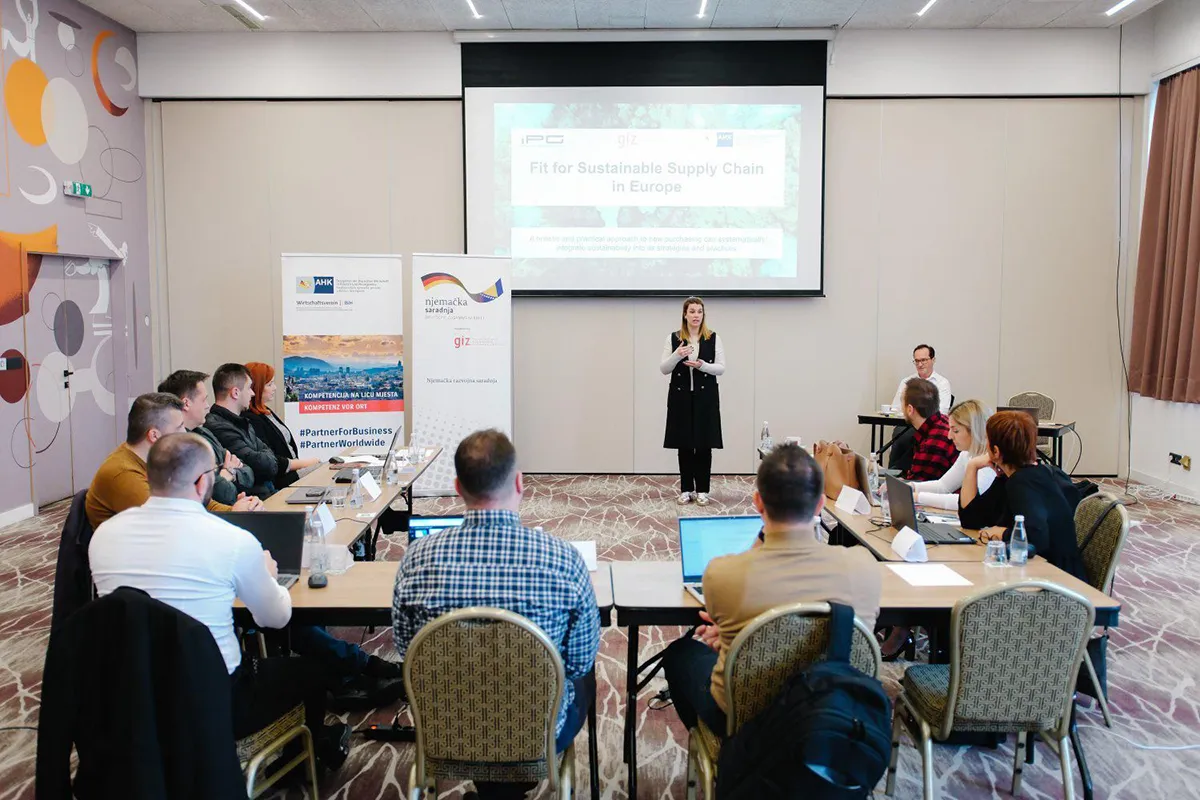
Through practical workshops, participants developed supplier evaluation criteria, assessed risks related to specific materials and suppliers, analysed supply chain emissions, and designed actionable steps applicable within their companies. The training was delivered through four modules covering EU regulations, supplier assessment methods, risk analysis, sustainable procurement strategy development, and practical tools for implementation.
Participants from different companies and sectors took part in the programme, enabling the exchange of experiences on challenges across different parts of the value chain. Companies were able to compare approaches, reflect on their own processes, and develop solutions tailored to their business environments. The focus was on applying the acquired knowledge. Participants worked on case studies based on real business processes, linking sustainability topics with everyday decisions on suppliers, materials, risks, and future improvements.
The programme is based on a “Train-the-Trainers” approach, through which participants develop capacities to apply knowledge within their own organizations and support other companies in Bosnia and Herzegovina. Many companies work with European partners and face requirements related to suppliers, emissions, environmental impacts, and responsible business practices, while available local expertise helps interpret these requirements and plan steps appropriate to company size, sector, and market ambitions. The most significant long-term result is the participants’ ability to transfer knowledge further. Their future application within companies and support to other enterprises can open space for wider adoption of more sustainable business practices in the BiH private sector.
For Merima Osmić from Lukavac Cement, the programme was particularly useful as it allowed sustainable procurement to be viewed through concrete business situations. As a supply chain manager, she worked on a case related to processes within her company, focusing on supplier criteria and supply chain risks.
“The greatest value of the programme for me was its interactivity. Through practical examples, I was able to immediately connect knowledge with real business challenges. It showed me how sustainable procurement can become part of everyday decision-making, especially through clearer supplier criteria and more systematic monitoring of supply chain impacts,” Osmić said.
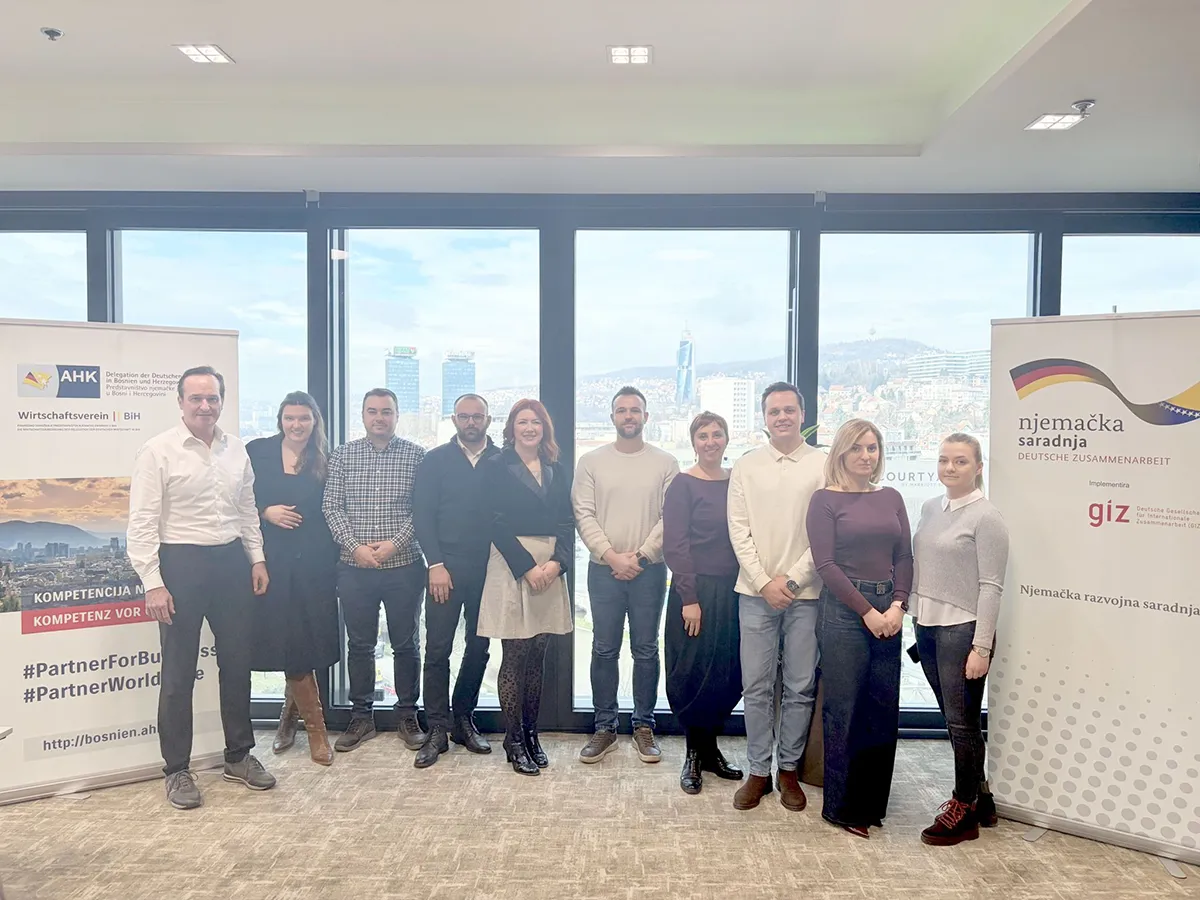
The “Fit for Sustainable Supply Chain in Europe” programme brought together ten participants, different sectors, and international expertise around a topic that is increasingly shaping the operations of domestic companies. Through several months of work, participants gained tools for supplier assessment, risk analysis, supply chain impact monitoring, and the development of more sustainable procurement processes.
The ten participants now possess knowledge and tools they can apply within their own organizations and share with other companies. Their experiences serve as a starting point for further improvements, internal training, and stronger supply chains across different sectors of the domestic economy. The multiplication of knowledge gives this programme its long-term value. Every new company that introduces clearer supplier criteria, improves risk monitoring, or develops more sustainable procurement processes represents a further step in strengthening the competitiveness of Bosnia and Herzegovina in the European market.
This success story was developed within the Sustainable Economic Development and Employment Promotion Programme (SEDEP) in Bosnia and Herzegovina, jointly financed by the European Union, the Government of Switzerland and the German Federal Ministry for Economic Cooperation and Development (BMZ), and implemented by GIZ.