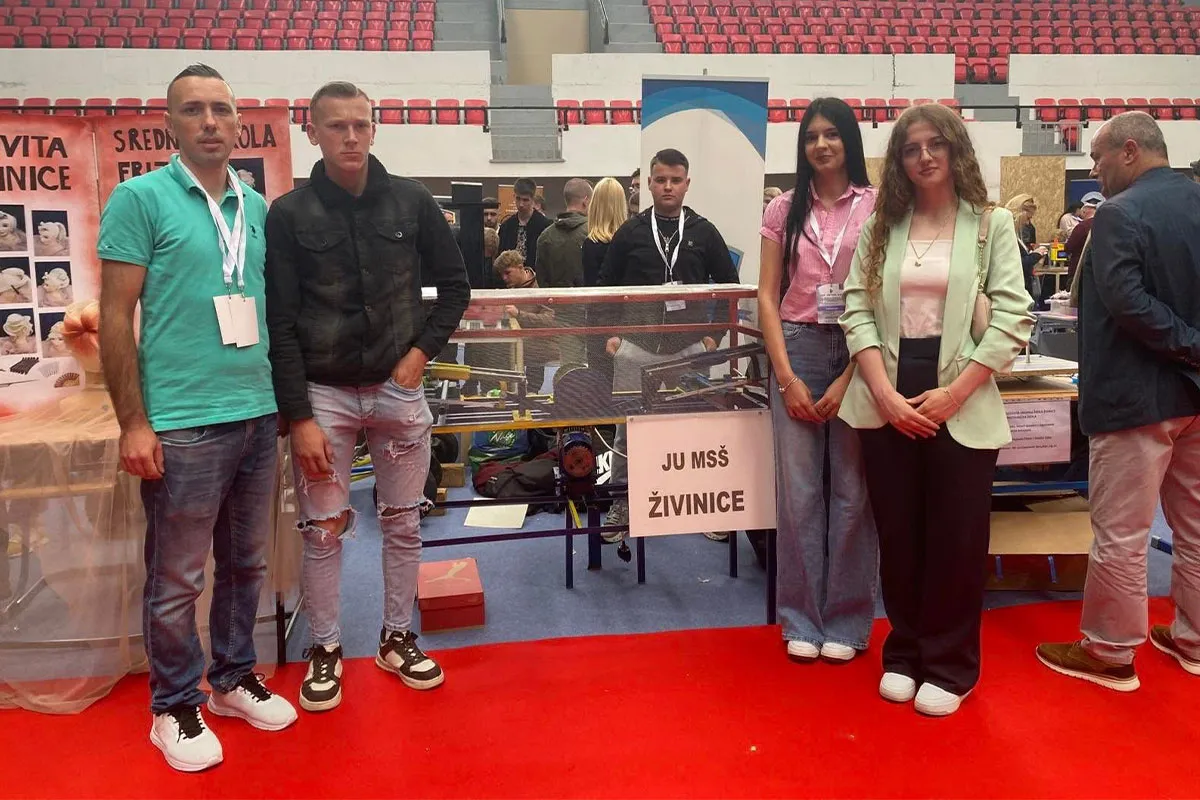
When people think of mechanical engineering, many still see it as a profession traditionally reserved for men. At the Public Mixed Secondary School Živinice, however, students and teachers set out to challenge that perception—and succeeded in the best possible way. Their project, Double Head Cutting Machine, won first place and achieved the maximum score of 100 points at this year’s Festival of Work of Technical and Vocational Schools of Bosnia and Herzegovina in Travnik, sending a powerful message that knowledge, innovation, and success know no gender boundaries.
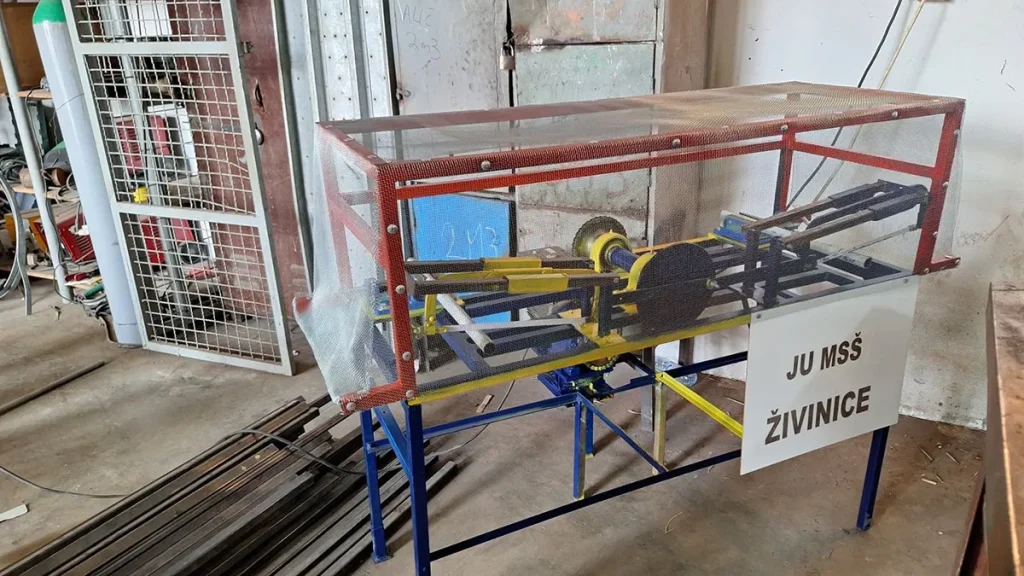
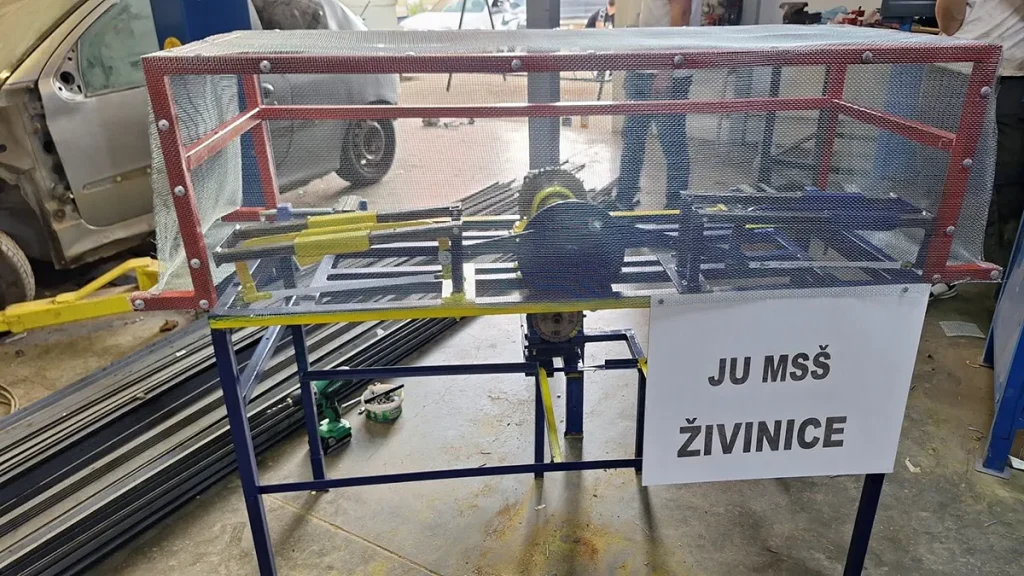
Behind this achievement stands a team of mechanical engineering students led by their mentor, Professor Adnan Mahmuzić. The machine they developed enables the simultaneous cutting of metal pipes and other metal components using two bandsaws, significantly increasing efficiency and reducing processing time. Yet beyond the technical innovation lies an even more important story—one about breaking stereotypes and encouraging young women to pursue careers in technical fields.
“Our primary motivation was to bring mechanical engineering closer to girls and show that technical professions are equally suitable for both young women and young men. We wanted to challenge the common perception that the most successful projects in this field are reserved for male teams. Our goal was to prove that knowledge, hard work, and dedication have no gender, and winning first place confirmed exactly that,” says Professor Mahmuzić.
The road to success was not only a technical challenge. For the female students involved, participating in one of the largest vocational competitions for secondary school students in Bosnia and Herzegovina was also an opportunity to demonstrate their skills and capabilities.
Throughout the project, each student made a unique contribution. First-year student Sara Halilović took the initiative in securing one of the key components—a shaft required for the machine—and actively participated in every stage of its development. Aida Zenunović demonstrated exceptional skills in material processing and welding, while Eldina Ahmetović stood out through her precision in manual metalworking and quality control of all installed components. Their commitment and responsibility played a crucial role in the project’s success.
According to Professor Mahmuzić, the greatest reward was not the trophy itself.
“The greatest value of winning first place was seeing the genuine joy and pride of the students when they learned that their work had received the maximum number of points. That sense of recognition for their effort and knowledge is invaluable for their future development. We are already discussing ideas for next year’s Festival of Work and planning new projects together.”
Experiences such as this have a lasting impact on young people. Through the project, the students not only gained new theoretical knowledge but also applied it in a real-world engineering context, strengthening their confidence in their own abilities.
“The reactions from fellow students, parents, and the wider community were overwhelmingly positive. The support the students received throughout the project demonstrated how important it is to invest in young people and their ideas,” Mahmuzić adds.
This achievement comes at a time when labour markets increasingly require qualified technicians and engineering professionals, while there is also a growing need for greater participation of women in technical occupations. For this reason, the story goes far beyond a school competition.
Professor Mahmuzić’s message to girls considering technical and vocational education is both simple and powerful:
“Do not think that these professions are only for men. Explore, work hard, and believe in your abilities. Do not allow stereotypes to limit you. With knowledge, perseverance, and dedication, you can achieve outstanding results and excel in whatever you choose to do.”
The victory in Travnik demonstrated exactly that. The machine developed by the students of the Public Mixed Secondary School Živinice won first place, but perhaps its greatest achievement was opening doors for future generations of young women to see mechanical engineering as a field full of opportunities for growth, success, and professional development. Sometimes, changing perceptions takes only 100 points—and the courage to push boundaries.
This success story was developed within the Sustainable Economic Development and Employment Promotion Programme (SEDEP) in Bosnia and Herzegovina, jointly financed by the European Union, the Government of Switzerland and the German Federal Ministry for Economic Cooperation and Development (BMZ), and implemented by GIZ.