Nearly four decades ago, Switzerland developed a pioneering model that enabled companies to jointly improve energy efficiency through expert support, process analysis, and peer-to-peer exchange of experience. The approach was later adopted and further developed in Germany through energy efficiency networks, where companies work together to identify opportunities for reducing energy consumption, operational costs, and emissions. Today, this model is widely recognised as a practical way for companies to learn from one another and accelerate the implementation of tangible, real-world solutions.
In Bosnia and Herzegovina—where energy costs, production efficiency, and the expectations of international buyers are becoming increasingly important for competitiveness—this approach has been adapted into a local framework through the Energy and Resource Efficiency Network (EREN). The network is established by the Foreign Trade/Chamber of Commerce of Bosnia and Herzegovina within the Responsible Business Hub BiH (RBH BiH). The Centre is part of the EU initiative for Private Sector Development in BiH, co-funded by the European Union and the Government of the Federal Republic of Germany, and implemented by GIZ.
The EREN network brings together 10 domestic companies from different industries and regions of Bosnia and Herzegovina, providing them with access to expert support, energy and resource consumption analyses, recommendations for technical and organisational improvements, calculation of carbon footprints in line with Scope 1, 2 and 3 methodologies, as well as structured peer learning. Key focus areas include renewable energy in production, energy management systems, ventilation and dust extraction systems, waste heat recovery, and digital monitoring of energy use.
Among the participating companies is AIRVENT d.o.o. from Velika Kladuša, a company specialising in ventilation systems. Due to the strong link between its core business and energy efficiency, air quality, and heat recovery solutions, Airvent serves as a practical reference example for other network members.
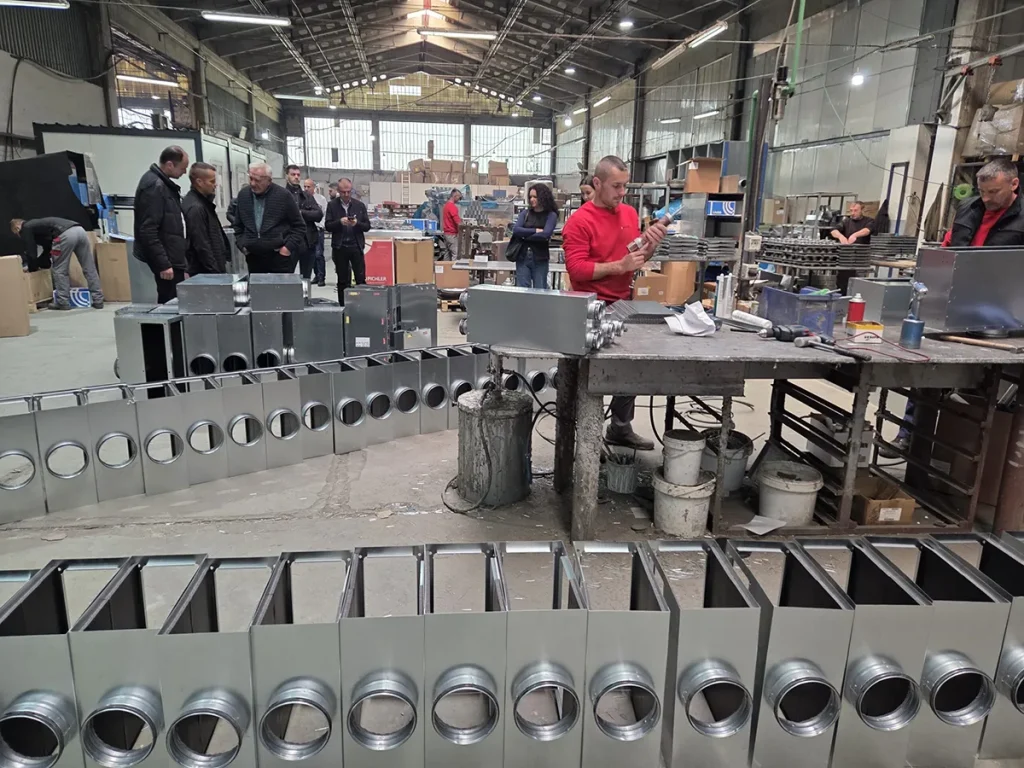
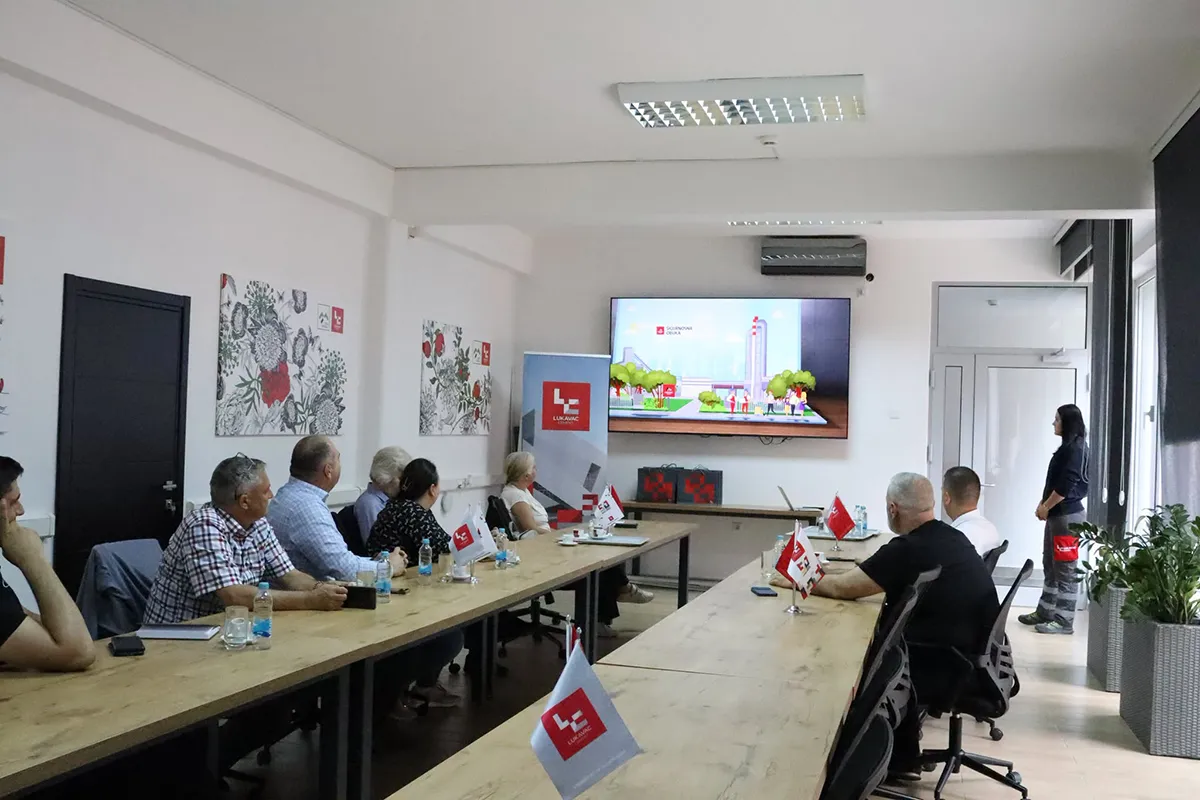
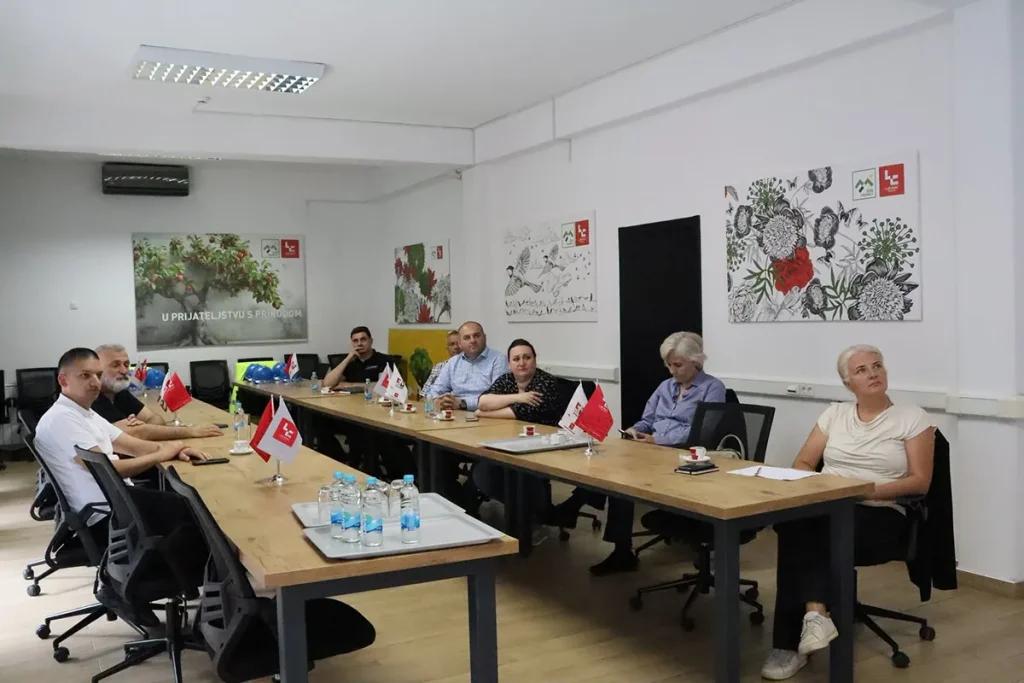
One of the GEMBA walks was hosted at Airvent, focusing on energy-efficient ventilation systems, heat recovery, and indoor air quality. Instead of discussing concepts only in presentations, company representatives and experts had the opportunity to observe solutions in practice, exchange views on implementation, and explore opportunities for improvement within their own production facilities.
For Airvent, participation in the EREN network means both access to expert knowledge and an opportunity to share its own experience with companies aiming to modernise production processes and improve energy performance.
“Participation in the EREN network is a valuable opportunity for us to exchange experiences and connect with experts and companies actively working on improving energy efficiency and sustainability. Through the GEMBA walk at Airvent, we had the opportunity to demonstrate how solutions in ventilation, heat recovery, and air quality can be applied in practice, while also opening constructive discussions on challenges and improvement opportunities in the industry. We believe such initiatives are particularly important in the context of preparing domestic industry for EU standards and future market requirements in energy efficiency and sustainable business practices,” says Aida Šabić from AIRVENT d.o.o.
For Mikroelektronika from Banja Luka, participation in the network represents an opportunity to take a closer look at its own production processes and receive expert recommendations for improvement. Energy and resource audits can reveal where the largest losses occur, which measures can reduce consumption, and whether technical upgrades, improved measurement systems, or process reorganisation are needed.
The support also helps the company better understand its emissions and prepare data that is increasingly important in cooperation with international clients and partners.
“Participation in the network is valuable for us because it connects us with companies and professionals with whom we can exchange experiences in improving production and business processes with the aim of increasing energy efficiency. As we develop products that contribute to more efficient energy use, our business vision is energy savings and a greener future for the planet. Therefore, one of our key goals is to apply all available methods of energy monitoring and savings within our organisation. Expert support through energy audits is particularly important to us as a basis for further investments in process improvements and, consequently, reducing costs and CO₂ emissions,” says Sanja Praštalo from Mikroelektronika Banja Luka.
The key strength of the EREN network lies in the fact that companies do not go through this process alone. Through GEMBA walks and workshops, the experience of one company becomes a learning opportunity for others—helping them identify applicable solutions faster, avoid costly investment mistakes, and define their own priorities more clearly.
For the 10 companies involved, energy and resource efficiency is not only about compliance with sustainability trends. It is a pathway towards better cost management, modernised production, preparation for evolving customer requirements, and stronger competitiveness.
Through the experiences of its members, the EREN network demonstrates how expert support and knowledge exchange can be transformed into concrete business action—from solutions implemented directly in production facilities to strategic insights that help companies plan their next steps more effectively.
This success story was developed within the Sustainable Economic Development and Employment Promotion Programme (SEDEP) in Bosnia and Herzegovina, jointly financed by the European Union, the Government of Switzerland and the German Federal Ministry for Economic Cooperation and Development (BMZ), and implemented by GIZ.