
A unique framework connecting education, the private sector and the green transition
Bosnia and Herzegovina has taken an important step towards modernising vocational education and training (VET) by developing the first inter-occupational framework for green learning outcomes – a unique document that, for the first time, defines common green competencies applicable across different occupations and sectors throughout the country.
As labour markets are rapidly changing and economies increasingly adapt to sustainability principles, schools and education systems face the challenge of equipping learners with the knowledge and skills required for future green jobs. The new framework directly responds to this need by enabling the integration of green competencies into existing curricula – not through the introduction of a new subject, but by embedding them into existing vocational and general education content.
The document “Inter-occupational Green Competencies and Learning Outcomes with Recommendations for their Integration into the Vocational Education and Training System” was developed through the project “Improving the Framework for Sustainable Vocational Education and Training with a Focus on Green Transformation”, implemented by the Chamber of Commerce of the Zenica-Doboj Canton in cooperation with GIZ and national and international experts. The project is part of the initiative Strengthening Vocational Education and Training in Bosnia and Herzegovina (SVET), co-financed by the Government of Switzerland and the Government of the Federal Republic of Germany through the programme Sustainable Economic Development and Employment Promotion (SEDEP).
The development of this framework was the result of joint efforts by an interdisciplinary working group established in 2024, bringing together representatives of education institutions, the private sector, experts and other relevant stakeholders. The objective was to define competencies that go beyond individual occupations and that will be relevant for future workers across different sectors.
The framework covers five key areas of green competencies: understanding the environmental impact of work processes; sustainable management of resources and energy; waste management; application of environmental and energy protection standards; and safe handling of hazardous substances.
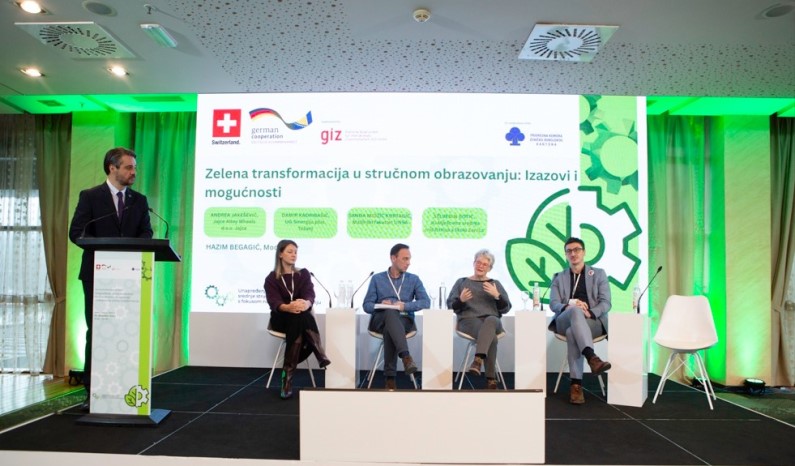
Professor at the Faculty of Mechanical Engineering, University of Sarajevo, and author of the document, Sanda Midžić Kurtagić, emphasises that successful implementation of the framework requires coordinated action by all relevant stakeholders:
“It is essential that all relevant actors understand the approaches and concrete activities required to successfully integrate the planned green learning outcomes into the education system. Although this process will not be simple, active advocacy and cooperation among all stakeholders are crucial. The professional community, industry and educational institutions have already demonstrated significant enthusiasm and technical readiness – what is needed now is clear institutional support.”
A pilot occupation connecting labour market needs and education
To test the framework in practice, the occupation of CNC operator was selected for pilot implementation in the Zenica-Doboj Canton – an occupation with high labour market demand and significant potential for green transformation.
The selection was based on an analysis of private sector needs, strategic documents and a survey conducted among more than 35 companies. The findings showed that CNC operators represent an occupation with strong employment potential, while also offering opportunities to introduce greener production principles.
The author of the recommendations for integrating green learning outcomes into the CNC operator curriculum, Damir Kadribašić from Sinergija plus Tešanj Association, explains:
“We analysed industry needs and identified occupations with the greatest potential for green transformation. CNC operator emerged as an occupation that is highly demanded on the labour market, while also providing a strong example of where green principles can be practically applied.”
The pilot implementation is being carried out at JU Mixed Secondary Industrial School Zenica, where the recommendations will be integrated into the teaching process and serve as a model for further application in other vocational schools.
School principal Selvedin Botić highlights:
“Our goal is to provide students with the knowledge and competencies they need for employment. Developing environmental awareness and responsible use of resources are important requirements of today’s labour market, and this framework enables us to systematically integrate these aspects into the learning process.”

Partnership as the foundation for sustainable change
The development of this framework demonstrates that sustainable education reform requires cooperation among different actors – educational institutions, businesses, chambers of commerce, experts and international partners.
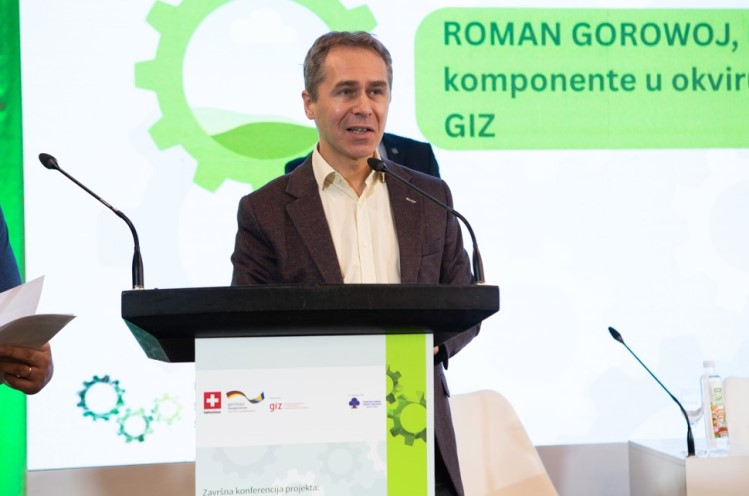
Roman Gorowoj, Manager of the Strengthening Vocational Education and Training in BiH (SVET) initiative within the SEDEP programme, emphasises:
“Integrating green competencies into vocational education and training is an important step for the future of Bosnia and Herzegovina’s economy. This pioneering inter-occupational framework bridges traditional curricula with the demands of a modern, sustainable labour market. By embedding green learning outcomes into curricula and the learning process, we ensure that future generations of professionals develop the competencies needed for the country’s green transformation.”
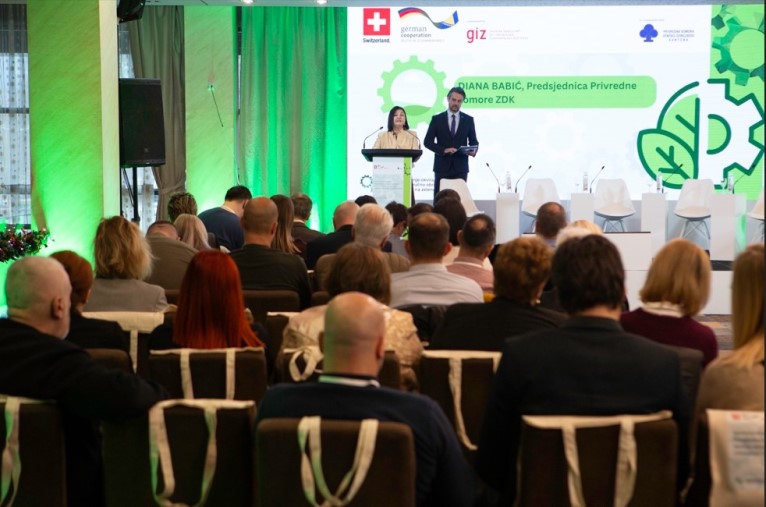
Diana Babić, President of the Chamber of Commerce of Zenica-Doboj Canton, adds:
“The development of this inter-occupational document represents an important step towards the systematic greening of vocational education in Bosnia and Herzegovina. Chambers of commerce play a key role in connecting education and the private sector, and this framework enables labour market needs to be more clearly and consistently reflected in education policies.”
The inter-occupational framework for green learning outcomes represents much more than an educational document – it is a tool for strengthening the connection between education and the economy and an important step towards building a workforce ready for the challenges of the green economy.
Through this approach, students acquire not only professional knowledge, but also develop awareness of sustainability, responsible resource use and the role their future occupations can play in Bosnia and Herzegovina’s green transformation.
This initiative demonstrates that meaningful change can be built through collaboration – when schools, businesses and institutions work together to create an education system prepared for the future.
This success story was developed within the Sustainable Economic Development and Employment Promotion Programme (SEDEP) in Bosnia and Herzegovina, jointly financed by the European Union, the Government of Switzerland and the German Federal Ministry for Economic Cooperation and Development (BMZ), and implemented by GIZ.